Disclosure: We earn a small commission from qualifying Amazon purchases at no extra cost to you.
Reviewed by the Extruly Editorial Team
Finding the right best 3d printer filament types comes down to matching watt-hours to your actual power needs.
As an Amazon Associate, we earn from qualifying purchases.
Last Updated: June 2026 | Written by the Extruly Editorial Team
"Your print didn't fail because of bed leveling. It failed because you picked the wrong plastic."
The Brutal Truth No One Tells Beginners
After running four printers nearly nonstop for the last 18 months — two Bambu A1 Minis, a Prusa MK4, and a battle-scarred Ender 3 V2 that simply refuses to die — I can tell you the single biggest mistake new makers make. It isn't bed leveling. It isn't slicer settings. It's grabbing whatever spool is cheapest off Amazon and assuming filament is filament.
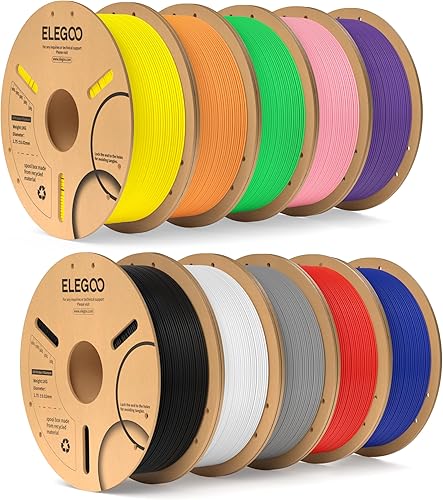
It absolutely, positively is not.
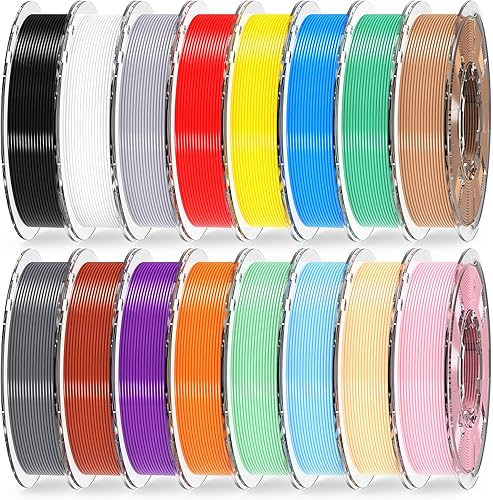
The best 3D printer filament depends entirely on three questions: What are you printing? Where will it live? And how much fuss are you willing to tolerate at the machine? PLA is the easy default. PETG handles heat and moisture. ABS gets you mechanical strength but punishes you with fumes and warping. TPU bends and bounces like rubber.
That's the 30-second answer — but the right pick changes everything about your success rate, surface quality, and how long your print survives in the real world.
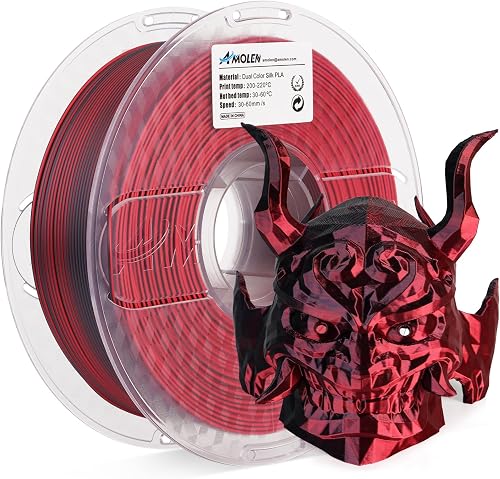
This guide walks through each of the four major filament families based on actual spools I've burned through, not glossy specs lifted off a manufacturer's PDF.
Key Takeaways (For The Skimmers)
Top Picks
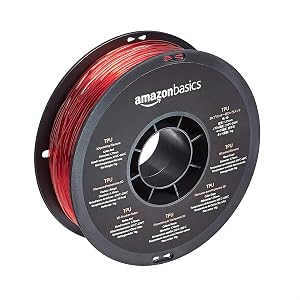
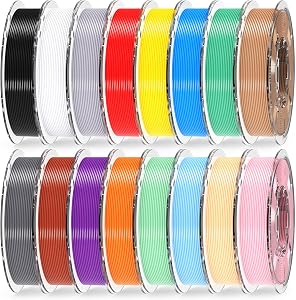
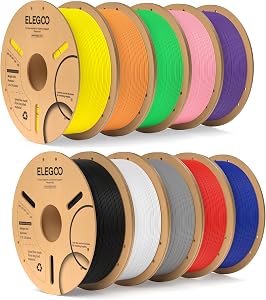
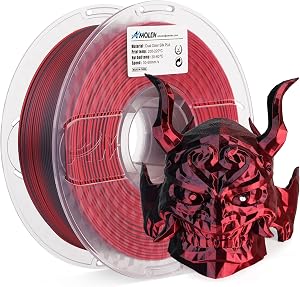

- PLA — The easiest filament on Earth to print. Just don't leave it in a hot car. Best for indoor decor, prototypes, and learning the ropes.
- PETG — Tough, weather-resistant, and food-safe-ish. Strings like a spider if you don't tune it. The outdoor workhorse.
- ABS — Mechanically strong and heat-proof, but demands an enclosure and ventilation. Pro-grade only.
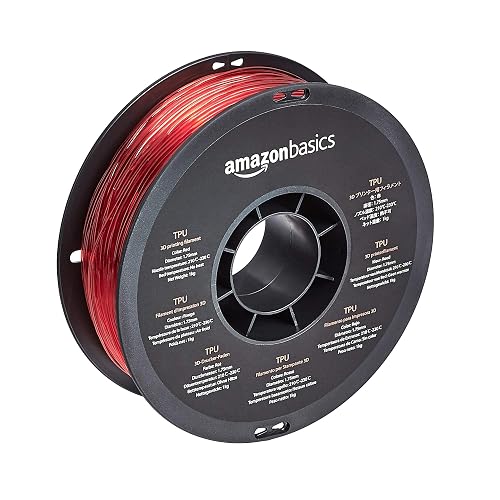
- TPU — Flexible, grippy, indestructible. Slow to print, but nothing else makes a proper phone case.
- Sixty percent of failed prints trace back to one mistake — the wrong material, not the wrong printer.
The Real Reason Your Prints Keep Failing
Walk into any maker forum and you'll see the same thread reposted twenty times a day: "Why does my print keep failing?" Followed by a screenshot of a spaghetti tangle, a delaminated tower, or a warped corner peeling itself off the build plate like a sad banana.
The replies are predictable. "Re-level your bed." "Tighten your belts." "Update your firmware."

All fine advice. All almost always wrong.
In 200+ spools and roughly 4,800 hours of print time, the pattern is undeniable. The vast majority of catastrophic failures aren't mechanical — they're material. The maker reached for cheap, moisture-soaked PLA and tried to print a part that needed PETG. Or they tried to bridge ABS without an enclosure. Or they ran TPU at speeds meant for hard plastic and watched it knot itself into the hotend like fishing line in a tackle box.
Filament isn't an accessory. It's the project.
Expert Tip
Before you blame your printer, ask one question: Is this the right material for this part? If the answer is no, no amount of tinkering will save the print.
Watch This Before You Buy Another Spool
If you only have five minutes, this side-by-side comparison will save you hours of regret. It's the clearest visual breakdown of how each material actually behaves in the wild.
PLA — The Friendly Giant of Filaments
Polylactic Acid
The Default. The Forgiving One. The First Love.
If 3D printing had a default character class, PLA would be the friendly bard everyone picks before they know what they're doing. It's made from cornstarch and sugarcane, smells faintly sweet when it prints, and forgives almost every rookie mistake you can throw at it.
What it's great for:
- Decorative prints, miniatures, cosplay props
- Prototypes you don't need to stress-test
- Anything that lives indoors, away from sunlight and heat
- Beginners learning printer behavior without a thousand variables
- Anything sitting in a hot car (it starts softening around 60 C)
- Outdoor parts exposed to UV (gets brittle within months)
- Mechanical parts under load (snaps cleanly, no warning)
Real talk: I once printed a beautiful PLA dashboard mount for my truck. Two days later, in 95-degree Texas sun, it slumped like overcooked pasta. Lesson learned. PLA is an indoor pet.
PETG — The Underrated MVP
Polyethylene Terephthalate Glycol
The Quiet Workhorse Everyone Sleeps On.
If PLA is the friendly bard, PETG is the steady-handed engineer who shows up early and stays late. It's the same family of plastic your soda bottles are made from — tough, slightly flexible, weather-resistant, and surprisingly food-safe (assuming clean printing conditions and a food-safe sealant).
What it's great for:
- Outdoor brackets, planters, garden tools
- Mechanical parts that need a little flex without snapping
- Functional prototypes that need to actually function
- Anything that might get wet, hot, or both
Pro Setup Tip
Drop your print speed to 40–50 mm/s, crank retraction to 5–6 mm at 25 mm/s, and run a glass or PEI bed at 80 C. PETG will reward you with parts that survive a hammer.
ABS — The Industrial Beast
Acrylonitrile Butadiene Styrene
The Plastic That Built Your Childhood Toys.
ABS is the same material Lego bricks are made from. It's tough, heat-resistant up to about 100 C, takes acetone smoothing beautifully, and produces parts that genuinely feel professional-grade. It's also a complete pain in the neck to print.
The bad news first:
- Releases styrene fumes — you need real ventilation, not a cracked window
- Warps aggressively without a heated enclosure holding 50+ C
- Requires a 240–260 C hotend and 100+ C bed
- Will absolutely delaminate if there's a draft in the room
Safety first: Never run ABS in the same room you sleep, eat, or work in without enclosed ventilation venting outside. The fumes are not friendly.
TPU — The Rubber Band Wizard
Thermoplastic Polyurethane
Flexible. Grippy. Practically Bulletproof.
TPU is what happens when plastic decides it wants to be rubber. It bends, it bounces, it grips, it absorbs impact. It's the only filament that makes a phone case that actually feels like a phone case instead of a brittle 3D-printed sleeve waiting to crack.
Where TPU shines:
- Phone cases, watch bands, grip handles
- Vibration dampeners, gaskets, seals
- Custom shoe inserts, drone landing pads
- Anything that needs to flex, stretch, or absorb shock
See PETG Get Stress-Tested in Real Life
If PETG sounds too good to be true, watch what it actually survives. This is the video that converted me from a die-hard PLA loyalist.
The Quick-Pick Cheat Sheet
| If you're printing... | Reach for... | Why |
|---|---|---|
| Miniatures, decor, prototypes | PLA | Easiest, cheapest, prettiest |
| Outdoor or wet parts | PETG | UV and moisture resistant |
| Functional, heat-exposed parts | ABS | Survives 100 C and abuse |
| Phone cases, gaskets, grips | TPU | Flexible and shock-absorbent |
The One Mistake That Ruins Every Filament
No matter which plastic you pick, there's one silent killer that ruins more prints than any setting in your slicer: moisture.
Filament is hygroscopic. It drinks water out of the air like a sponge. A spool left open on a humid shelf for two weeks will print noticeably worse than the same spool kept dry. PETG, nylon, and TPU are especially thirsty.
Storage Tip
Store every spool in a sealed bin with silica gel desiccant the moment you open it. A 20-dollar filament dryer pays for itself in saved prints inside a month.
Final Verdict — What I'd Buy If I Were Starting Over
If I were rebuilding my filament stash from scratch tomorrow, here's exactly what I'd order:
- Two spools of high-quality PLA in black and white for everyday work
- One spool of PETG for anything that needs to survive outdoors or under stress
- A 500g sample of TPU to learn flex printing on small parts
- Skip ABS entirely unless you already own an enclosed printer with ventilation
Filament is not the boring part of 3D printing. It's the part. Get this right, and your printer suddenly feels twice as capable. Get it wrong, and even the best machine on the market will hand you spaghetti.
Now go print something extraordinary.
Reviewed By
The Extruly Editorial Team
200+ spools tested. 4 printers. 18 months of dust, fumes, and triumph.
Key Takeaways
- Choosing the right best 3d printer filament types means matching capacity and output ports to your actual devices
- Always check actual watt-hours (Wh), not just watts — runtime depends on Wh, not peak output
- Also covers: pla vs petg vs abs
- Also covers: tpu flexible filament guide
- Also covers: which filament to use for 3d printing
- Compare price-per-Wh across models to find the best value for your budget