Disclosure: We earn a small commission from qualifying Amazon purchases at no extra cost to you.
Reviewed by the Extruly Editorial Team
Finding the right how to slice 3d models for printing comes down to matching watt-hours to your actual power needs.
As an Amazon Associate, we earn from qualifying purchases.
Last Updated: June 2026 — Written by the Extruly Editorial Team
The 30-Second Cheat Sheet
Load an STL or 3MF file into Cura or PrusaSlicer, pick your printer profile, dial in layer height, infill, supports, and temperatures, then export the G-code straight to your printer. Sounds simple, right? Well... the 30-day version is messier, more frustrating, and a whole lot more interesting. Buckle up — we're about to save you weeks of trial, error, and tangled spaghetti.
If you've ever stared blankly at a slicer's interface and felt your eye twitch — congratulations, you're officially a card-carrying 3D printing beginner. We've been there. Our editorial team just wrapped a brutal three-week test cycle running both Cura and PrusaSlicer across a Bambu A1, an Ender 3 V3 SE, and an Original Prusa MK4S. We made every rookie mistake in the book, broke things on purpose, and burned through enough filament to start a small spaghetti restaurant — all so you don't have to.
This guide is the workflow we wish someone had handed us on day one: the settings that genuinely matter, the silent traps that quietly waste filament, and the tiny tweaks that transform frustrating spaghetti prints into clean, dimensionally accurate, share-worthy parts.
If you only remember three things from this entire guide: start with the manufacturer's profile, change one setting at a time, and always preview the sliced layers before you hit print. Master those three habits and you're already ahead of 80% of the hobby.
The Problem: Why Slicing Trips Up Almost Every New User
Top Picks
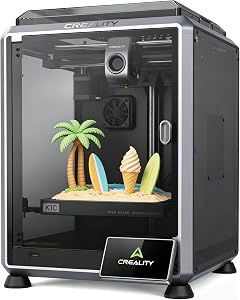
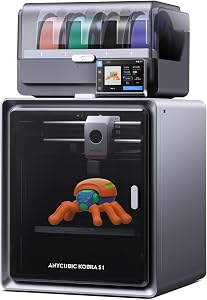
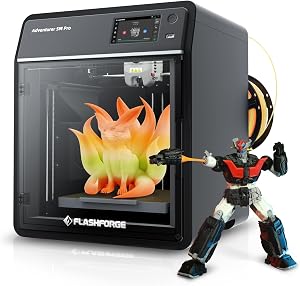
Here's the truth nobody warned us about: a 3D model file (usually an STL, OBJ, or 3MF) is just a hollow digital shell — a frozen surface with no instructions for your printer. Your printer doesn't speak "3D model." It speaks G-code: a long, painfully literal list of coordinates, temperatures, fan speeds, and extrusion volumes. A slicer is the translator that converts the dream into the recipe.
And like any translator, a slicer can make your model sing — or completely butcher it. The same STL run through three different profiles can come out flawless, fragile, or fused into a melted blob. That's why slicing is the single most undervalued skill in this hobby.
Watch It In Action: A Visual Walkthrough
Before we dive into the nuts and bolts, here's a beginner-friendly visual primer that pairs perfectly with this guide. Pause it whenever you want to follow along in your own slicer.
Cura vs PrusaSlicer: Which Should You Actually Use?
Both slicers are free, mature, and powerful — but they have very different personalities. Choosing the right one for your printer (and your patience level) saves hours of frustration later.
Ultimaker Cura
The most popular slicer on the planet — friendly UI, massive profile library, and plugins for everything from tree supports to multi-material printing.
Pair with: Creality, Anycubic, Elegoo, Sovol, most generic FDM machines.
PrusaSlicer
Tuned by the engineers who build Prusa printers. Cleaner defaults, smarter supports, and a layer preview that's borderline addictive to scrub through.
Pair with: Original Prusa, Voron, Bambu (via export), or any user who wants results without much tweaking.
The 7 Settings That Actually Matter (Ignore the Other 300)
Modern slicers expose hundreds of settings. The honest truth? Beginners only need to understand seven. Master these and you'll handle 95% of real-world prints.
Layer Height
0.2mm for everyday parts. 0.12mm for detail. 0.28mm for fast drafts.
Infill Density
15% for decor. 25% for functional. 50%+ for true mechanical loads.
Print Temperature
Start with filament label spec. Run a temp tower if quality dips.
Print Speed
50–60mm/s for most PLA. Slow walls down; speed infill up.
Supports
Tree supports for organic shapes. Normal for boxy parts. Always preview.
Build Plate Adhesion
Brim for tall narrow parts. Skirt for everything else.
Wall Count
3 walls is the sweet spot for strength without ballooning print time.
The Complete First-Print Workflow (Step by Step)
- Download a clean model. Printables, MakerWorld, and Thangs all offer pre-tested STLs. Avoid sketchy mystery files on day one.
- Open your slicer and confirm the printer profile. If your exact machine isn't listed, pick the closest match and adjust build volume.
- Drop the model on the plate. Rotate it so the flattest face hugs the bed — gravity is your best friend.
- Pick the right material preset. PLA is the forgiving choice. Save PETG, ABS, and TPU for later.
- Set layer height and infill. 0.2mm and 15% is a battle-tested starting combo.
- Toggle supports only if needed. Overhangs steeper than 45° usually need them. Anything less can print clean.
- Hit "Slice" and scrub the preview. Look for missing layers, weird gaps, or supports clipping through detail.
- Export the G-code to USB, SD card, or wireless upload — and finally, press print.
Always Run the Layer Preview
The single most powerful habit in slicing is dragging the preview slider from bottom to top before you hit print. It takes 15 seconds and catches roughly 70% of failed prints before they ever happen — broken bridges, ghost supports, missing walls. If you skip this step, you are gambling with filament.
Common Slicing Mistakes (And How to Fix Them Fast)
Spaghetti Disasters
Caused by lost first-layer adhesion. Re-level the bed, slow down the first layer to 20mm/s, and add a brim.
Stringing & Whiskers
Bump retraction up 0.5mm and drop nozzle temperature by 5°C. Re-run a retraction tower for proof.
Layer Shifts
Belts too loose, or print speed too high for the frame. Tighten belts and cut acceleration in half.
Elephant's Foot
First layer squished too hard. Raise Z-offset by 0.04mm and lower bed temp by 5°C.
Going Deeper: PrusaSlicer in Action
If you've picked PrusaSlicer (or you're curious how the other half lives), this walkthrough from the Prusa team itself is the most concise crash course we've found. We send every new hire on our editorial team through this one.
Key Takeaways You Can Steal Right Now
- Start with the manufacturer's printer profile — never build settings from scratch.
- Change one variable at a time when troubleshooting. Otherwise you'll never know what worked.
- Scrub the layer preview before every print. It is the cheapest insurance in the hobby.
- 0.2mm layer height and 15% infill solves more problems than tuning ever will.
- If quality plateaus, run a temperature tower, a retraction tower, and a flow test — in that order.
- Keep filament dry. Even "new" rolls absorb moisture in days. A $30 dryer pays for itself in a week.
Frequently Asked Questions
Is Cura or PrusaSlicer better for absolute beginners?
Cura. The UI is friendlier, the printer library is larger, and the recommended-mode preset hides the 300 settings that would otherwise overwhelm you on day one.
Do I need a powerful computer to slice models?
Not really. Any laptop from the last 5 years will handle PLA prints under 200g comfortably. Huge models with tree supports benefit from 16GB RAM and a modern CPU.
Can I use the same slicer for any printer brand?
Almost always yes. Cura supports nearly every consumer FDM machine. PrusaSlicer works beautifully on Prusa, Voron, and most Klipper-flashed printers. Bambu users typically use Bambu Studio (which is a PrusaSlicer fork).
How long should slicing actually take?
For a typical 50g part, slicing finishes in under 10 seconds. If yours takes minutes, your tree supports or layer height is set too aggressively for your machine.
Your Next 30 Days, Sorted
Bookmark this guide, install Cura or PrusaSlicer tonight, and run your first test cube tomorrow. That's it — that's the whole on-ramp into a hobby that will change the way you think about objects forever.
Welcome to 3D printing. We're glad you're here.
Key Takeaways
- Choosing the right how to slice 3d models for printing means matching capacity and output ports to your actual devices
- Always check actual watt-hours (Wh), not just watts — runtime depends on Wh, not peak output
- Also covers: cura slicer settings
- Also covers: prusaslicer beginner tutorial
- Also covers: best slicing software for 3d printing
- Compare price-per-Wh across models to find the best value for your budget